
—*—

Is our ministry first and foremost focussed on bringing about that inner, spiritual transformation in people? Are we too much preoccupied with the externals of governance, with burocracy, with imposing rules, with administration?
—*—
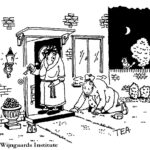
The power of the keys is interpreted wrongly as top-down hierarchical power as practiced in feudalistic societies. It refers to opening gates. Are we aware of the spiritual dimension of this power?
—*—
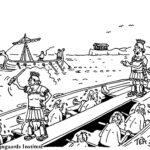
Do we sufficiently acknowledge that Church leaders, including Popes, have proclaimed errors? How can this be prevented in the future?
—*—
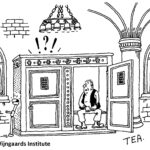
Are we sufficiently aware of the fact that church authority is spiritual authority? That means a different sort of authority, authority that derives from ‘God’, the deepest dimension underlying the universe, the mysterious power that pervades reality as we know it?
—*—
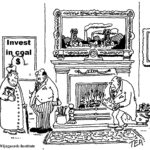
Do church leaders realise that a general ministry to the multitude – through sermons at Sunday mass, brief sessions in the confessional or pastoral guidance in print – will not do? That they should create opportunities to meet people in person? That they should give time to listen to people’s individual stories and solve their specific issues?
—*—
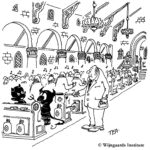
Do church leaders realise the special role they should play in this? That without underestimating the expertise of professional psychiatrists, spiritual guides can and should make their own contribution? That they can wipe away guilt, reassure waverers, put those who stray back on the right path? That they can speak in the name of God who is love?
—*—

Do Church leaders honour what was priority for Jesus? Do they focus on educating people to a spiritual transformation within their minds and hearts? Do they encourage them to live by unconditional love, to listen to the Spirit, to be faithful to their conscience?
—*—
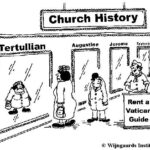
Would Jesus have agreed to the misguided patriarchal reasonings of Greek, Roman and medieval scholars? Did he, when he conferred spiritual power on his successors in the ministry, not clearly intend to include women?
—*—

Ordination to the priesthood or the episcopacy does not impart theological knowledge, in spite of bishops presumptuously claiming the title of ‘Doctor of Divinity’. This also applies to popes. They should therefore listen to the advice offered by scholars who have studied Sacred Scripture and other sources of doctrine in depth. Though guided by the Spirit in their own way, priests or bishops do not enjoy the specific insights acquired by biologists, psychologists, sociologists and other academics. These too are guided by the Spirit.
—*—
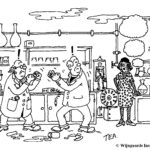
Why do church leaders usually act as if the gift of prophecy has been lost in our time? Do they sufficiently realise that they should pay attention to that voice? Of course, discernment is required. Some honest persons may give advice which on careful examination proves to be misguided. But may a multiplicity of voices be so easily dismissed?
—*—
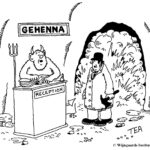
Fidelity to Christ’s teaching requires that both aspects of the Church are kept intact: the authority of the ministers and the authority of the community. An assembly without Christ’s minister, like a Council without Pope, or a diocese without bishop, cannot stand as a community of Christ. But can the minister replace the community? Can the Pope overrule the Council? May a bishop ignore his diocesan faithful?
—*—
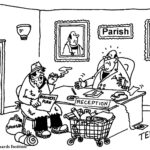
Has the ‘teaching authority’ of the Church not during recent centuries in actual fact totally ignored the ‘sense of faith’? The majority of Catholics in developed countries ignore the papal prohibition of using contraceptives in family planning. And if, as reliable polls reveal, up to 70 % of church going Catholics in major countries believe women should be ordained priests, may these results just be dismissed out of hand?
—*—

Why do church leaders not inform the faithful that, in special circumstances when no priest is present, any competent member of the community can preside at the Eucharist? Why are chaplains in hospitals and prisons not routinely taught that, in special circumstances, they too can hear confessions and absolve people from their sins?
—*—

The Church in our day has re-affirmed the essentially equal dignity of all its members. Have we really absorbed the full implications of this? :“There is in Christ and in the church no inequality on the basis of race or nationality, social condition or sex…” (Vatican II, The Church, no 32). If we think that a loss of social status necessarily implies a loss of authority, could it not be that we have misunderstood the kind of authority Jesus is thinking about? If Jesus’ authority did not involve the claim to a higher status, why do we think leadership in the church profits by it?
—*—
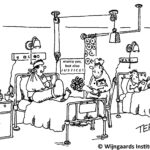
In recent years the official position on clerical immunity has changed, but do we show it in action? If bishops or priests harm another person, are we on the side of the cleric or of the victim? Do we cooperate fully with secular authorities investigating misbehaviour or crimes committed by ordained persons?
—*—

Does our ministry gravitate to service from institutions: the church building, the parish centre, the local church hall? Our is our ministry people-focussed? Do we sufficiently realise that we should create opportunities to visit people in their own homes?
—*—
Ch 18. Not of this world
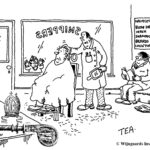
Since Vatican II much has improved in the Church. No longer is the Pope’s palanquin surrounded by imperial ostrich feathers as was done in the past. No longer do Cardinals drag a ten-meter red trail along the floor of the cathedral, as I still saw in pre-conciliar days. Much ostentation has been turned down. But does the underlying feeling still remain: “I’m different from you. I inhabit a higher sphere than you do …”?
—*—
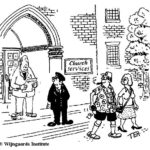
Have finances become entangled with authority in the Church? Who controls the finances in parishes and dioceses? Is it financially attractive to become a priest and/or bishop? Has this not become a motive for joining the ministry in some countries? Are priests and bishops accountable to the community for their financial dealings?
—*—

In the course of the centuries an institutional structure has grown up which is supposed to support the Church’s spiritual mission. In actual fact in many cases the institution has come to dominate. And Church leaders have gained total control of it, without proper accountability to the faithful. Is that what Jesus had in mind?
—*—
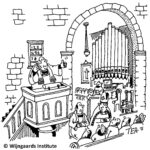
Do our honey-tongued Sunday homilies really proclaim Jesus’ message to people of our day and age? Our teenagers and educated adults are facing serious assaults by the religion-ignorant, or often religion-hostile, media of our secular age. Should we through our sermons not confront the challenge and proclaim our faith in a way that makes sense to our contemporaries?
—*—
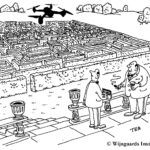
Our science-driven technological world creates fresh possibilities which also pose new moral dilemmas. How should spiritual authority respond to such challenges of our modern age? In this new climate, do Church leaders also listen to the Spirit speaking through experts – biologists, psychologists, sociologists you name it?
—*—
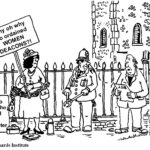
During the first millennium tens of thousands of women served their communities, after having been sacramentally ordained deacons. Why are church authorities still reluctant to ordain women as deacons – in spite of all the overwhelming evidence to their validity? Why deprive Catholic communities of the leadership and service that such women could provide?
—*—
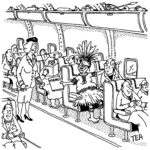
When Church leaders in our time believe they have to condemn certain views as erroneous, how do they at the same time provide pastoral support to the persons who hold those views? What do Church leaders do to bring members of the two opposing wings together in a friendly and fruitful exchange of views?
—*—
Ch 26. Authority Reform – allow more regional variation
Are church leaders aware of the enormous cultural and social differences between various countries and continents? When reforms in church practice are agreed upon, should the implementation of these reforms be imposed everywhere at the same time? Or should the bishops’ conferences in those countries and continents not be allowed to introduce changes gradually according to local needs and requirements?
—*—
On all levels of the Church there are traditionalist groupings. They often form closed circles in which members continuously push each other to resist change. Can we, somehow, break into those circles and initiate a meaningful discussion? Vatican II reforms were often not accepted by people because the justification for them had not been properly explained. Will Church leaders now take care to provide extensive briefings on motives and reasons when introducing reforms?
—*—
Do we mistakenly believe that being faithful to Sacred Tradition means holding on to the way things were in the past? Do we not realise that, on the contrary, Sacred Tradition which goes back to Jesus himself, implies the authority of church leaders to deal with new challenges and walk new paths? Do we have the courage to listen to the Spirit and pursue responsible reforms?
—*—
Overview
Short bibliography
 |
 |
  |
  |