Misuse of Authority
Theologians
 In order to maintain total control of opinion and action within the universal Church, the Popes and their Vatican lieutenants have created a climate in which all forms of ‘criticism’, ‘dissent’ or ‘protest’ against the official party-line are vigorously suppressed. This applies especially to theologians and all experts who enjoy a specific area of competence:
- Theologians in official positions (e.g. in dioceses) are put into a straightjacket by an Oath of Fidelity.
- Catholic Institutions: universities and seminaries, are being kept under close scrutiny. Dissenting theologians are dismissed from their posts at such institutions.
- The international Commissions of Theologians, set up to advise the Vatican in various fields, have been sidelined if they disagree with the official policy. At the momentthey are just being filled with party-liners. Examples: the Biblical Commission, the Commission appointed to study contraceptives, the Commission to study the role of women in the Church, etc. etc.
- Similar restrictions and pressures are put on writers, editors and publishers.
- In effect, free speech is being suppressed, resulting in a climate of fear and dishonesty.
These are the principles laid down in Church documents:
* “All the faithful, both clerical and lay, should be accorded a lawful freedom of inquiry, freedom of thought and freedom of expression, tempered by humility and courage, in whatever branch of studies they have specialised.” Gaudium et Spes, § 62
* “Those who are engaged in the study of sacred disciplines, in matters in which they are experts, enjoy the just freedom of inquiry and of expressing their mind prudently, with due obsequium toward the magisterium of the church.”Canon Law § 218; see also 212 § 3.
But what happens in fact? Read what Professor Ladislas Örsy says:
- Do theologians enjoy ‘academic freedom’ in the Church?
They do by law, but not always in practice. - Can a theologian legitimately dissent from officially taught doctrine?
Yes he/she can, if there are good reasons for it. - Do theologians at times have a duty to express dissent from officially taught doctrine?
True obedience to the Gospel and truth may demand open opposition to the teaching authority. - Can clear guidelines for dissent be formulated?
No, since many situations are unique. - May a theologian’s dissent be voiced through the public media?
Yes, it may. Often the attitude of the Roman authorities leave no other way.
In reality, the Vatican suppresses all forms of legitimate disagreement or protest.
The Oath of Fidelity
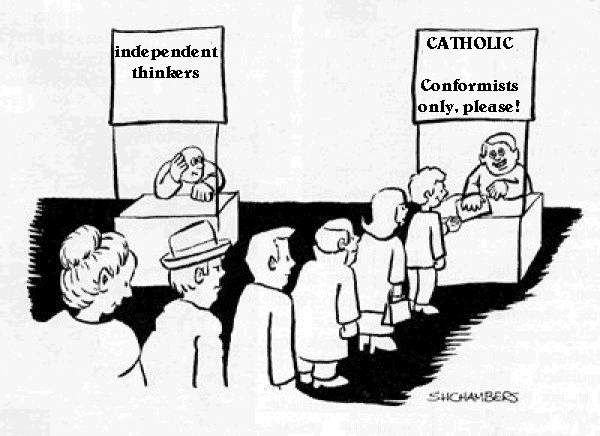
All theologians are restrained by a party-line oath of fidelity
Theologians are required to swear the oath of loyalty which now, since Ad Tuendam Fidem (28 May 1998),includes agreement to the ban on women priests. The oath contains the following phrases which express fidelity not just to revealed faith but to what the Pope imposes as doctrine:
- “I also believe with firm faith all those things which are contained in God’s written word or in tradition and which have been proposed by the Church in a solemn judgment, in either the ordinary or universal magisterium as Divinely revealed and to be believed.
- I also firmly embrace and keep everything collectively and individually which with regard to the doctrine of faith and morals is definitively proposed by the same authority.
- I also adhere with a religious obedience of will and mind the doctrines which either the Roman Pontiff or the college of bishops pronounce when they exercise the authentic magisterium even though they do not intend to proclaim them in a definitive act.”
Hans Küng speaking in a private interview
From 1960, Küng was professor of theology at Eberhard Karls University, Tübingen, Germany. Like his colleague Joseph Ratzinger (now Pope Benedict XVI), .he was appointed theological expert to the Second Vatican Council until its conclusion in 1965. At Küng’s instigation, the Catholic faculty at Tübingen appointed Ratzinger as professor of dogmatics. However, due to the 1968 students revolt, Ratzinger moved to the University of Regensburg, ending cooperation between the two. In the late 1960s, he became the first major Roman Catholic theologian since the late 19th century to publicly criticise the doctrine of papal infallibility, in particular in his book Infallible? An Inquiry (1971). Consequently, on December 18, 1979, he was stripped of his missio canonica, his licence to teach as a Roman Catholic theologian.
Online documentation
- The Modern Theology of Tradition, J P. Mackey , 1962, ch. 3&4. A comprehensive survey of theological views on the ‘Sensus fidelium‘.
- Recent theological observations on magisterial documents and public dissent, by
Francis Sullivan (1997). - Obedience a Questionable Virtue, by Marie Louise Uhr (1998).
- Free speech in the Church, by Alain Woodrow (1998).
- Muzzling the Theologians, by Richard McBrien (1999).
- The Call of Conscience. The dilemma of the Christian in a totalitarian church, by
Michael Keane (2003).
‘Dissenters’ dismissed from Catholic Institutions
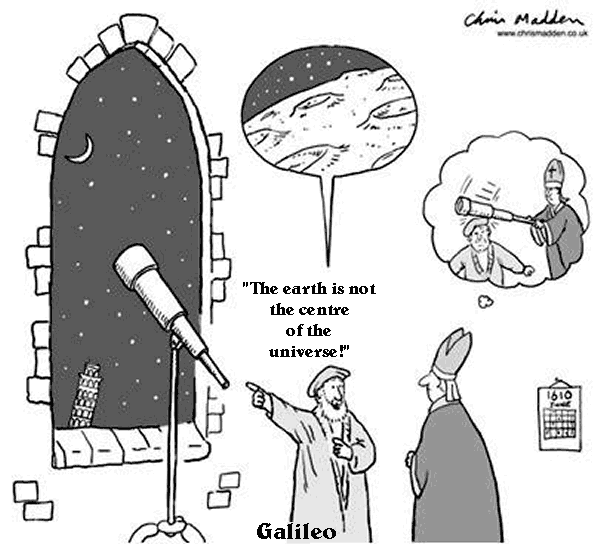
Catholic institutions: seminaries and universities, are kept under close scrutiny. Dissenting lecturers are dismissed
- Professors in seminaries and theological colleges are kept under strict supervision.
- Theologians have been dismissed from their teaching posts because of their dissenting views.
- Others have been warned that they will be dismissed if they speak out on controversial issue.
- Rome has issued new instructions that put Catholic Colleges under more direct ecclesiastical control.
Online documentation
- A Letter to the Pope, by Bernard Häring (1990). ‘The magisterium has become a battle-cry of intransigent people’.
- The Place of Silencing in the Teaching of the Church, by Jeannine Gramick (2000).
- Second Canonical Warning. Fr Roy Bourgeois is being Canonically punished for believing that women can be ordained
- My Journey from Silence to Solidarity Fr Roy Bourgeois tells his own story of how the Vaitcan is trying to silence him.
Theological Commissions emasculated
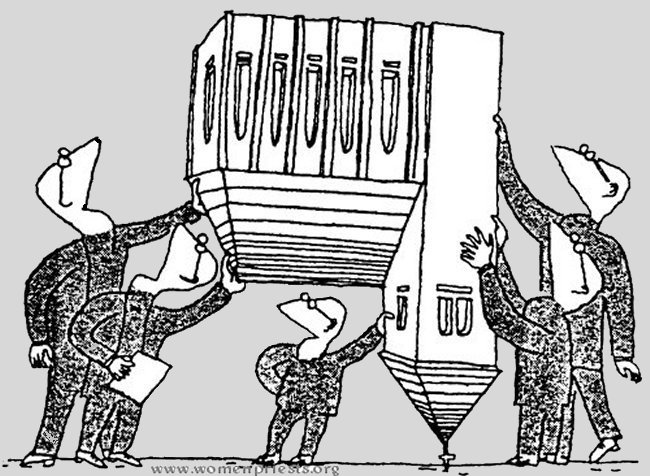
The Commissions of Theologians, set up to advise Vatican Departments, are sidelined when they disagree. Only yes-sayers are selected to be members.
International Theological Commissions, advising the Vatican officials on questions of principle and strategy, could
make a difference. However a pattern emerged:
- The outcome of such consultations is often manipulated by Roman interference. An infamous example is the Third World Congress for the Lay Apostolate (Rome 1967) that manifested the wide range of ‘hierarchical control mechanisms’ that Rome has used ever since.
- The Commission set up in 1967, under prompting of the Second Vatican Council, to advise on Family
Planning, concluded that the use of contraceptives should be allowed in certain circumstances. The report was suppressed. The Pope decreed a total ban on contraceptives in Humanae Vitae. Click here! - The Biblical Commission affirmed in 1975 that there were no scriptural arguments against the ordination of women. The report was suppressed and the Commission made subservient to the Theological Commission.Click here!
- Under pressure of the Bishops’ Synod on the Laity, the
Vatican appointed in 1973 a Special Commission on the Function of Women in Society and in the Church (FWSC) in 1974. However, during meetings of this commission (FWSC) women members experienced a lack of freedom of expression and of open consultation. ‘Our views were being systematically suppressed.’ Read the full report by Dirkje Donders.
Online documentation
- The Impact of Humanae Vitae, by John Mahoney S.J. (1981).
- Use the Gifts God Gives, by Mgr John Egan (2001). ‘I look at my Church and tremble’.
Restricting free expression in print
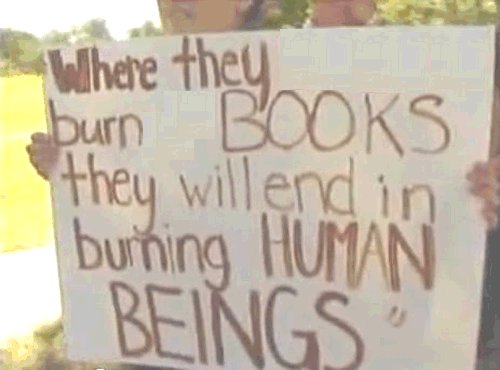
Similar restrictions and pressures are put on writers, editors and publishers.
- Many Catholic newspapers and magazines are vulnerable because they are owned by dioceses or by publishing houses owned by religious congregations. Rome has issued strict instructions to book censors not to give the Imprimatur or Nihil Obstat to books that advocate change in the Church.
- Woman at the Altar by Lavinia Byrne, allegedly burnt its stock of 1300 copies when it was informed by the local bishop that Rome was displeased with the book.
Online documentation
- Use the Gifts God Gives, by Mgr John Egan (2001). ‘I look at my Church and tremble’.
- Violence in the Church, by Fr. Camilo Macisse (2003).
Fear and dishonesty
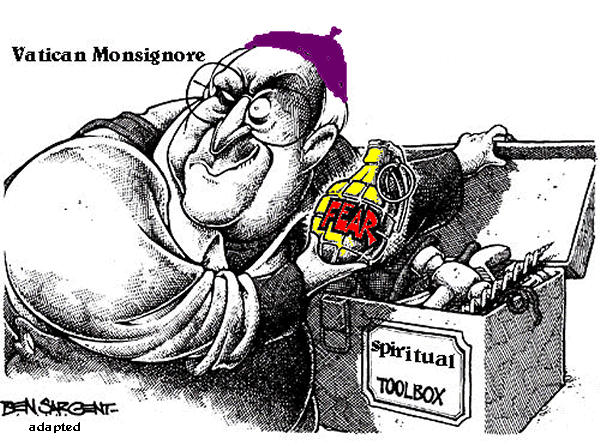
The suppression of free speech results in a climate of fear and dishonesty.
The vast majority of theologians knows that the Vatican position on many issues is academically not correct. While being
afraid to speak out openly about this, they will discuss views opposed to the Vatican among themselves. Some will teach their students the true findings of Scripture and Tradition behind closed doors.
Online documentation
- Integrity by Jospeh S. O’Leary (1985).
- Where are the Priest-Prophets? , by Fr Owen O’Sullivan (2003) ‘There is much untruth in the Church. There is hypocrisy and humbug at all levels. There is pretended loyalty, outward profession of the official line accompanied by inner denial; there is the corrupting power of fear’.
 |
 |
 |
 |
| The Laity | Theologians | Bishops | The Vatican |